Description
Polish Studies will enable you to gain knowledge of the Polish language and literature—both historical and contemporary. You will also explore the phenomena and transformations of contemporary culture within a broader context.
During the studies:
- you develop independent thinking,
- you learn to read carefully and understand texts, especially literary ones,
- you actively participate in cultural life,
- you analyse changes in contemporary language, norms and methods of communication,
- you learn a creative perspective on the world, tradition and contemporary culture and literature,
- you discover what connects language and literature with other areas of social and cultural life,
- you discover how cultural and technological changes influence language and literature.
What do we teach?
We share knowledge in the following areas:
- literary studies – including literary theory and poetics,
- linguistics – including contemporary grammar and language culture,
- other related fields.
Rekrutacja rozpoczyna się 2 czerwca
Curriculum
Link to the curriculum and study plan – full-time 1st cycle studies
Link to the curriculum – full-time 2nd cycle studies
Duration of studies: 6 semesters (1st cycle), 4 semesters (2nd cycle)
Number of ECTS credits: 180 (1st cycle)
Selected courses in the Polish Studies degree programme – 1st cycle:
- Phonetics and Phonology of the Modern Polish Language – allows for an understanding of the structure of the Polish language.
- History of the Book, Writing, and Typography – presents the development of the book, writing, and typography over the centuries.
- Literary-Historical Seminar – discusses selected phenomena characteristic of a given literary era.
Selected courses in the Polish Studies degree programme – 2nd cycle:
- Linguistic Research Methodology – introduces the concepts of contemporary linguistics.
- Contemporary Literature – covers Polish literature and literary life after 1989.
Forms of classes:
- lectures
- practicals
- tutorial – classes based on group discussions
- laboratory classes – practical meetings in the workshops
- workshops.
Majors
Majors within the Polish Studies degree programme respond to labour market needs and take into account the specific characteristics of the region.
During 1st cycle studies you can choose:
- text editing and copy-editing – you get to know the principles of editing various types of publications and learn how to edit and typeset text,
- literary studies – deepening the application of literary interpretation, utilising electronic sources, and working in cultural institutions,
- teaching training programme – you prepare to work as a Polish language teacher in a primary school.
During 2nd cycle studies, you can choose:
- editorial work and modern publishing,
- literary studies,
- teacher training programme,
- teaching Polish as a foreign and second language.
Graduation Requirements
In order to take the diploma examination, you have to:
- achieve the learning outcomes specified in the curriculum,
- demonstrate the knowledge of a foreign language,
- receive a positive thesis grade.
You finish your studies with a diploma exam with at least a ‘satisfactory’ grade. Upon completing your studies, you will receive a diploma that confirms your qualifications.
Detailed information on the rules for awarding diplomas and the requirements for the diploma thesis can be found in the Rules and Regulations of Studies at the University of Silesia and the Diploma Award Regulations
Admission Process
The admission process for studies at the University of Silesia is carried out via the Online Application System at irk.us.edu.pl (IRK).
You can enrol for a degree programme and find all the necessary information in the IRK system. You will find out how the admissions process works, what the deadlines are, how much the application fee is, and what documents you need to submit.
Questions? Feel free to write to the International Admissions Office or visit rekrutacja.us.edu.pl and irk.us.edu.pl
Admission Requirements
Full-time 1st Cycle Studies
Admissions to university for the 1st cycle studies are determined by the results of the Matura exam. We take into account the written examination in the selected subjects:
| Polish | Modern Foreign Language | One Subject of Your Choice with the Highest Score |
| weight = 60% | weight = 20% | weight = 20% |
| ||
2nd cycle Studies
You can apply for admission to 2nd cycle studies if you have:
- a bachelor’s, engineering or master’s degree diploma,
- a foreign diploma that allows you to study in the country of issue.
Admission is determined by your place on the ranking list, based on your diploma evaluation and grade point average.
Point threshold
In accordance with the admission criteria, no programme at the University of Silesia has got a predetermined point threshold.
Committees create ranking lists during the admission process. Admission thresholds vary every year, as they depend on the number of candidates, their high school graduation exam results, and the applicable qualification rules.
Additional criteria
To begin the degree programme you do not have to meet any other criteria.
Traineeships and Internships
As part of your studies, you complete a mandatory professional internship aligned with your major. You can complete your internship at a selected association or company, or at one of the institutions collaborating with the Faculty of Humanities:
- Radio Katowice;
- Radio eM;
- University of Silesia Press;
- Silesian Library;
- Wydawnictwo Sonia Draga;
- Instytucja Kultury Miasto Ogrodów;
- „Gazeta Wyborcza” – the Katowice branch
- „Dziennik Zachodni”.
The number of internship hours depends on the chosen major.
1st cycle studies
- text editing and proofreading – 60 hours,
- literary studies – you do not do any internships,
- teacher training programme – 120 hours.
2nd cycle studies
- editorial work and modern publishing – 60 hours,
- literary studies – you do not do any internships,
- teacher training programme – 30 hours,
- teaching Polish as a foreign and second language – 30 hours.
Collaboration
During your studies, you can pursue your passions, attend literary gatherings, edit and publish texts, and participate in academic student groups—such as the Polish Studies Academic Club.
Representatives of the socio-economic sector collaborating with the university provide advice within the Degree Programme Teaching Council, while selected major courses are taught by practitioners from institutions partnering with the University of Silesia.
Study abroad
As part of the Erasmus+ programme, you can complete an internship abroad at various institutions or partially study at one of the partner universities in 31 programme countries, including:
- Austria,
- Belgium,
- Bulgaria,
- Czechia,
- France,
- Lithuania,
- Germany,
- Romania,
- Slovakia,
- Slovenia,
- Sweden,
- Türkiye,
- Italy.
Contact
Dean’s Office
Our office handles matters concerning document submission and university enrollment, degree programmes and curricula, course registration, student ID cards, tuition fees, and USOSweb login issues
International Admissions Office
tel. +48 32 359 22 72
tel. +48 32 359 22 73
e-mail: admission@us.edu.pl
Our office handles matters concerning the admission process of foreign nationals (candidates without Polish citizenship): including the course of the university admission process, formalities related to required educational credentials (legalisation and apostille), and issuance of certificates of qualification for study.
Faculty Admission Committee
You can find the details in the Online Application System by selecting the degree programme of your interest at
https://irk.us.edu.pl/pl/.
Our office handles all admissions matters, including acceptance for studies, grade conversion within the Online Application System, navigating the admission process, reviewing entry criteria, and managing required documentation.
-
General information
-
Faculty
Faculty of Humanities
-
Study level
1st cycle, 2nd cycle
-
Form of studies
full-time studies
-
Study profile
general academic
-
Language of instruction
Polish
-
Degree
Bachelor’s degree, Master’s degree
-
Field of science
literary studies
-
Cities
Katowice
Co nas wyróżnia
01.
Elastyczność
Tworzysz własną ścieżkę dzięki różnym formom dydaktycznym oraz świadomemu wyborowi zajęć, opiekunów naukowych i specjalizacji.
02.
Praktyka
Stawiamy na praktykę: staże w firmach, warsztaty oraz zajęcia z ekspertami. Poznasz realia rynku pracy i zasady komercjalizacji badań.
03.
Rozwój
Realizujesz własne projekty badawcze pod okiem mentorów. Wspieramy koła naukowe oraz wyjazdy na wymiany w programach ERASMUS+ i MOST.
04.
JAKOŚĆ
Kształcimy na najwyższym poziomie, co potwierdza akredytacja PKA. Zajęcia prowadzi kadra o wysokich kwalifikacjach i uznanym dorobku naukowym.
Graduate zone
Career Paths
After completing your Polish Studies, you will find work as:
- Polish teacher in primary and secondary schools,
- journalist, textologist, editor, communications specialist,
- organiser of events, e.g. festival and concerts,
- copywriter, content creator, designer, spokesperson,
- blogger, website administrator.
Graduate Knowledge
- you are familiar with the nature of the humanities and the role of Polish studies within them,
- you use terminology from the field of literary studies, linguistics and other humanities,
- you understand selected facts, processes and phenomena and their interconnections,
- you are familiar with theories and methods of analysing literature and the Polish language,
- you understand the impact of cultural and technological changes on language and literature,
- you know the principles of conducting scientific research, ethics and copyright,
- you understand the fundamentals of how literary institutions operate and issues regarding language culture,
- you are familiar with the working conditions for a Polish language specialist in the labour market,
- you are familiar with various schools and methods of humanistic research and the principles of interdisciplinarity,
- you can analyse literary and linguistic texts using various research methods,
- you understand the social, cultural and historical conditions of language and literature,
- you notice the connections between literature and other arts and non-literary discourses,
- you understand the importance of gender categories and various linguistic practices in literature,
- you are familiar with contemporary achievements and research centres in the fields of literary studies and linguistics,
- you are able to apply knowledge from other scientific disciplines to research in Polish studies
Graduate Skills
- You communicate clearly, employing terminology from the fields of Polish studies, literary studies, and linguistics, and participate in debates.
- You present arguments and formulate conclusions drawing on subject-specific literature and scholarly sources.
- You independently solve complex and unusual problems by selecting appropriate information and sources.
- You analyse, compare, and critically evaluate literary and linguistic texts, as well as other non-literary forms of expression.
- You interpret literary and linguistic phenomena within a socio-cultural context.
- You employ the methods and tools of a Polish language and literature specialist, including digital techniques and information tools.
- You plan individual and team work—including interdisciplinary projects—and engage in self-directed learning.
- You use a foreign language at the B2 level, read texts of an advanced level of difficulty, and prepare presentations and written assignments.
- You formulate critical opinions and write reviews and literary-critical essays for various audiences.
- You prepare research papers—under supervision—in accordance with academic standards.
Social Skills
- After your studies, you appreciate expert knowledge and use it to solve problems.
- You consciously participate in the information flow and public debates.
- You act entrepreneurially and engage in social and cultural life.
- You promote a culture of reading and uphold the correctness of the Polish language.
- You carry out tasks according to plan – both independently and as part of a team.
- You analyse and interpret literary and linguistic texts.
- You combine knowledge from various fields and systematically develop your competencies.
Ambasador kierunku
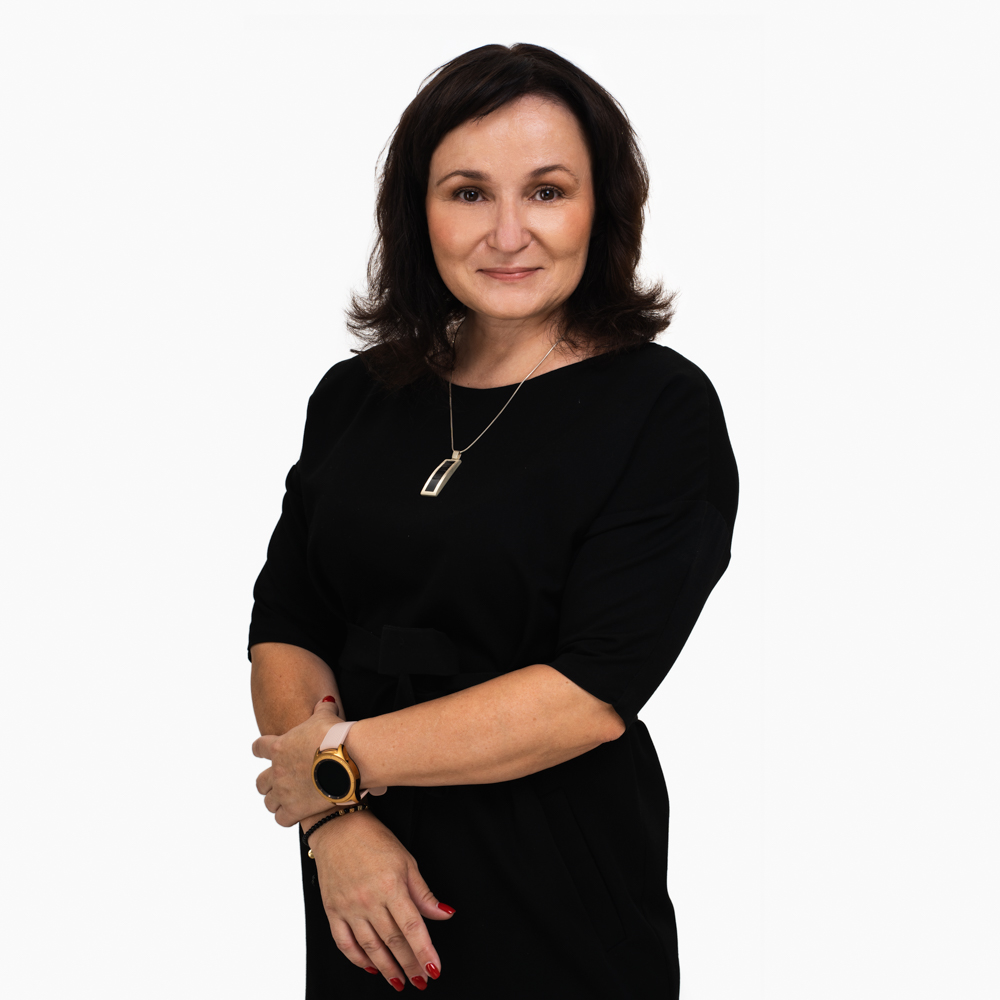
dr hab. Katarzyna Wyrwas, prof. UŚ
Jestem polonistką i językoznawczynią, a moją największą zawodową pasją jest poprawność językowa. Od 2004 roku prowadzę Poradnię Językową UŚ, gdzie pomagam rozwiewać wątpliwości dotyczące ortografii czy odmiany wyrazów. W moich badaniach naukowych przyglądam się mowie potocznej, od analizy narzekania, przez skargi urzędowe, aż po codzienne opowiadanie historii. Uczę, jak czerpać z bogactwa języka i budować komunikację opartą na zrozumieniu.
Ambasador kierunku
Martyna Skrobisz
Moda od zawsze była dla mnie językiem – sposobem opowiadania o sobie bez słów. Dlatego w pracach językoznawczych zajmuję się właśnie językiem mody, także w pracy dyplomowej. Fascynuje mnie historia ubiorów, tworzenie wzorów, łączenie kolorów i to, jak strój wpływa na odbiór. Wiem, że z modą chcę związać przyszłość. Najpierw muszę tylko okiełznać maszynę do szycia.

Ambasador kierunku
Patryk Laksa
Studiuję filologię polską na UŚ, a moją ścieżkę wyznaczyły fascynacje Tolkienem i twórczością Andrzeja Stasiuka. Od lat realizuję się na scenie jako aktor kabaretowy i stand-uper, mam też za sobą debiut na dużym ekranie. Choć codziennie zmagam się z MPD, na uczelni czuję się w pełni sprawny i działam na rzecz dostępności. Wierzę w uniwersytet jako miejsce bliskiego spotkania z człowiekiem.