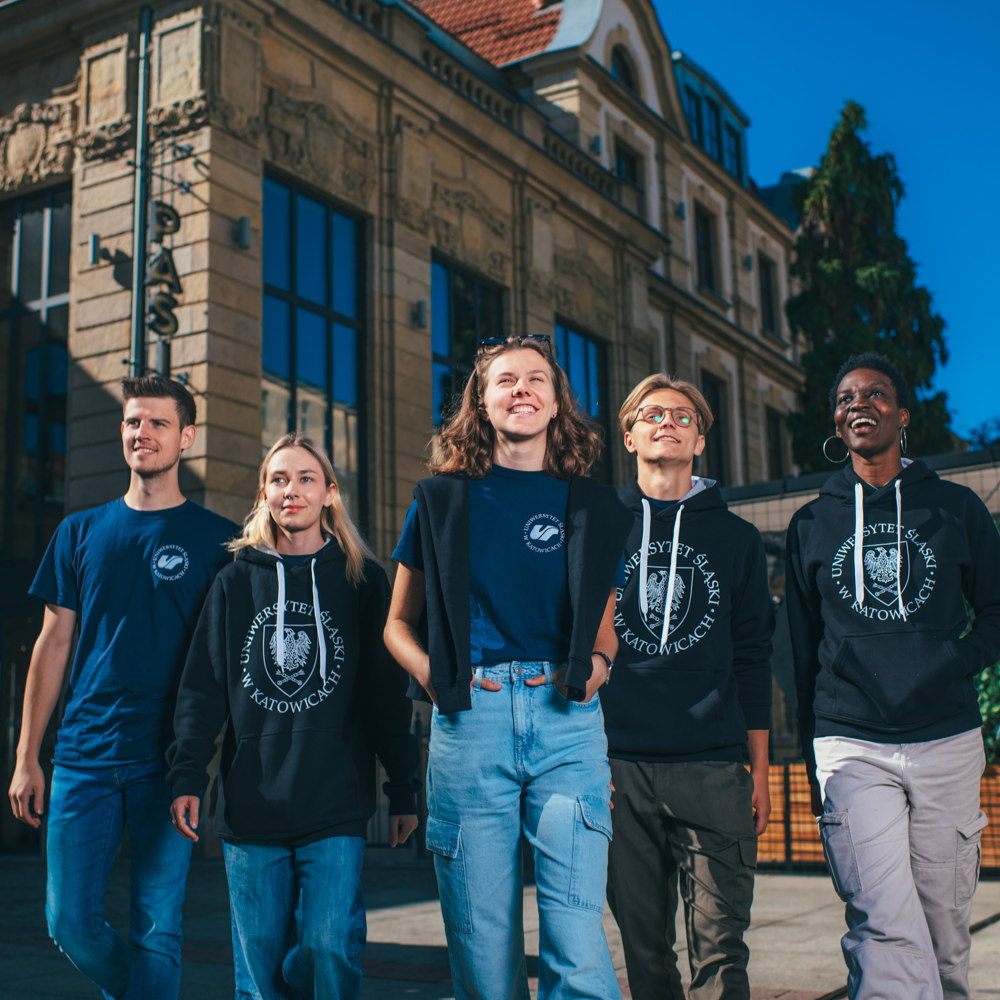
Description
Do you dream of a career in HR? You’ve come to the right place! The Human Resource Management in Organisation degree programme combines theory with practice and prepares you for leadership and management roles.
During your studies, you will gain knowledge and skills in such areas as:
- recruitment and selection of employees,
- onboarding new employees,
- motivation, communication and PR,
- talent management,
- developing managerial skills,
- building an employer brand.
The programme also includes courses in which you will learn:
- social research methods and techniques,
- the use of research tools in management,
- analysing HR issues and finding practical solutions.
During your studies, you will learn about legal provisions and the principles governing the labour market. You will gain practical skills in e-HR and working in a digital environment. You will also learn how to use IT tools, including applications used in human resource management and knowledge management systems.
You will learn ways to organise your work effectively, develop creativity and an openness to new solutions. You will also strengthen your negotiation and compromise-building skills, which are particularly useful in teamwork.
Rekrutacja rozpoczyna się 2 czerwca
CURRICULUM
Link to the curriculum and study plan – 1st cycle studies
Duration of studies: 6 semesters
Number of ECTS points: 180
Selected courses in Human Resource Management in Organisation:
- Psychology in Organisational Management – covers the basic functions of management, including planning and employee recruitment.
- Public Relations – teaches how to prepare an image campaign and design PR activities for different target audiences.
- Management Training – explores the various roles and functions of a person in a managerial position.
- Recruitment and Outplacement – you will learn how to manage the recruitment process effectively and provide professional support to departing employees.
Forms of classes:
- lectures
- practicals,
- warsztaty
- tutorials
- seminars – preparation for writing a thesis
Majors
After the third semester, you will choose one of three majors:
- Marketing in Organisation
You will learn how to build a company’s image, promote the organisation and develop your personal brand. Drawing on knowledge of psychology, self-presentation and ethics, you will manage HR projects in a modern way.
- Human Resources in Organisation
You will become an expert in recruitment, employee development and workforce management. During your studies, you will acquire the hard and soft skills that are highly valued in the profession.
- Entrepreneurship and Management
You will learn to plan and monitor activities and utilise the company’s resources. You will develop managerial, psychological and ethical competencies to carry out projects effectively.
Graduation requirements
To take the final examination, you must:
- pass all the learning outcomes specified in the curriculum,
- confirm the required level of proficiency of a foreign language,
- obtain a positive grade for your thesis.
You complete your studies when you pass the diploma examination. You complete your studies once you have passed the final examination.
Upon graduation, you will receive a degree certificate confirming your qualifications and readiness for professional work.
Admission
Admission to studies at the University of Silesia is conducted via the Online Application System (IRK): irk.us.edu.pl.
In IRK, you can enrol for studies and check all the necessary information, including what the admission process looks like, what the deadlines are, how much the admission fee is and what documents you need to submit.
Any questions? Send an email to the Education Department or visit rekrutacja.us.edu.pl and irk.us.edu.pl.
Admission requirements
Full-time 1st cycle degree programme
| The selection process includes an examination of school-leaving certificates — results from the subjects listed below, taken as part of the written component of the school-leaving examination, are taken into account: | ||
| Polish language | Foreign modern language | Elective subject: history, civic studies, philosophy, art history, music history, ancient culture and Latin language, mathematics, Polish, a modern foreign language |
| weighting 30% | weighting 30% | weighting 40% |
| ||
Part-time 1st cycle degree programmes
The selection process includes an examination of school-leaving certificates — results from the subjects listed below, taken as part of the written component of the school-leaving examination, are taken into account: | ||
Polish language | Foreign modern language | Elective subject: history, civic studies, philosophy, art history, music history, ancient culture and Latin language, mathematics, Polish, a modern foreign language |
weighting 30% | weighting 30% | weighting 40% |
| ||
Point thresholds
At the University of Silesia, we do not set minimum point thresholds for any field of study.
Committees create ranking lists during the admission process. Admission thresholds change every year, as they depend on the number of candidates, their high school graduation exam results, and the applicable qualification rules.
Additional criteria
You do not need to meet any additional criteria to study this degree programme.
INTERNSHIPS AND WORK EXPERIENCE
During your studies, you will combine professional work experience with the preparation of your diploma thesis. The experience you gain during your internships will help you prepare your diploma thesis in the form of a case study.
You will undertake internships from the 4th semester onwards. To complete your degree, you must undertake:
- 100 hours of professional work experience,
- 300 hours of dissertation-related work experience.
Work experience
During your internship, you will gain an insight into the working environment in companies that have a personnel, HR, or training department. You will learn to:
- communicate effectively and work well as part of a team,
- organise your own work and that of the team,
- manage your time, carry out tasks and take responsibility for the duties assigned to you.
Diploma thesis work experience
You will undertake your internship at an institution of your choice with an HR department. During this internship, you will learn about the company’s culture, its human resources management strategy, HR processes and communication structure.
The materials you gather will help you prepare your diploma thesis.
Cooperation
During your studies, you can:
- undertake an internship at an institution of your choice in one of the 31 countries participating in the programme,
- complete part of your studies at one of our partner universities abroad in such countries as: Bulgaria, Estonia, Germany, Lithuania, France, Spain, Portugal, Slovenia, and Italy.
Contact
The Dean’s Office for the degree programme
Matters relating to the submission of documents and enrolment for degree programmes, the curriculum, timetables, course registration, student ID cards, tuition fees, and problems logging in to USOSweb.
Education Department
tel. +48 32 359 18 10
tel. +48 32 359 18 80
tel. +48 32 359 16 22
e-mail: rekrutacja@us.edu.pl
Matters relating to admission, the admission process, problems registering in the IRK system, and the required documents.
International Admissions Office
tel. +48 32 359 22 72
tel. +48 32 359 22 73
e-mail: admission@us.edu.pl
Matters relating to the admission of international students (candidates who are not Polish citizens): the admission process, formalities concerning the required educational documents (legalisation, apostille), certificates of admission to degree programmes, etc.
Faculty Admission Committee
You can find the contact details in the IRK system by selecting the degree programme you are interested in: https://irk.us.edu.pl/en-gb/
Matters relating to admissions: acceptance for studies, conversion of grades in the IRK system, the university admission process, admission criteria, and required documents.
-
General information
-
Faculty
Faculty of Humanities
-
Study level
1st cycle
-
Form of studies
full-time studies, part-time studies
-
Study profile
general academic
-
Language of instruction
Polish
-
Degree
Bachelor’s degree
-
Field of science
sociology
-
Cities
Katowice
What makes us stand out?
01.
Flexibility
You create your own learning path thanks to a variety of teaching methods and the informed choice of modules, academic supervisors and specialisations.
02.
Practical experience
We focus on practical experience: internships in companies, workshops and sessions with experts. You will gain an understanding of the realities of the labour market and the principles of research commercialisation.
03.
Development
You’ll carry out your own research projects under the guidance of mentors. We support research societies and exchange trips through the ERASMUS+ and MOST programmes.
04.
QUALITY
We provide education of the highest standard, as confirmed by PKA accreditation. Classes are taught by highly qualified staff with recognised academic achievements.
Graduate zone
Career paths
After graduation, you’ll have a wide range of career opportunities – HR specialists are in demand across all industries and sectors.
You’ll find work as:
- HR generalist, HR specialist, HR advisor, HR manager, HR business partner,
- recruiter, HR coordinator, HR analyst, HR assistant, career adviser,
- payroll and HR specialist, HR office administrator, training and development specialist.
At work:
- you will manage recruitment projects and candidate selection,
- manage HR and payroll documentation,
- ensure the smooth running of HR processes,
- carry out activities involving recruitment marketing, internal PR, and employer branding,
- use digital tools to manage the digital workplace.
Your portfolio and skills upon graduation
In addition to your degree, you will gain a portfolio documenting all your skills and experience. The portfolio includes, amongst other things:
- certificates and reports from courses and projects,
- references from lecturers and student research group supervisors,
- evaluated projects completed during your studies.
Graduate knowledge
- You understand the key concepts of management and their application in HR work.
- You are familiar with various organisational structures and understand the factors that influence their functioning.
- You design and conduct social research relevant to HR.
- You develop and implement human resource management processes using modern tools, including IT and mathematical tools.
- You understand the importance of interpersonal and social communication and know how to communicate effectively within an organisation.
- You are familiar with the legal provisions relating to the functioning of organisations and HR standards.
- You apply the principles of intellectual property protection and copyright law.
- You understand the principles of ethics in people management and are able to deal with ethical dilemmas arising in the workplace.
- You are familiar with the psychological and social mechanisms governing how employees function within an organisation.
Graduate skills
- You identify and understand challenges and processes within the field of HR. You select effective methods and tools to analyse these challenges.
- You design and conduct social research. You analyse the results and present them using modern technologies.
- You prepare oral and written statements in Polish, drawing on your knowledge of sociology and management.
- You take an active part in debates and discussions. You present and evaluate different opinions.
- You plan and organise individual and team work in companies and organisations.
- You apply legal provisions and ethical principles in your professional work. You anticipate the consequences of your decisions.
- You communicate clearly and professionally in a foreign language at B2 level, using appropriate terminology.
Social skills
- You are able to assess challenges in your professional work and draw on expert knowledge.
- You act in an entrepreneurial manner. You inspire others to introduce beneficial changes in the workplace.
- You make responsible decisions in accordance with ethical principles.
- You plan tasks, set priorities and achieve individual and team objectives.
- You work with experts from various fields. You apply the principles of effective communication.